 (561) 394-6656
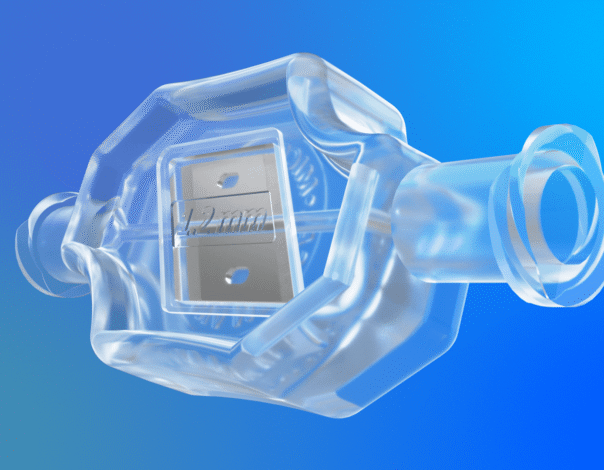
The Becker Micronizer
What it is
- The Becker Micronizer is a sterile, single-use device designed to resize harvested autologous adipose (fat) tissue for grafting (so-called “micro fat” or “nano fat”).
- Two main sizes are offered:
- 2.4 mm internal diameter version (blue): for creating “micro fat” intended for injection via 14-18 G cannulas.
- 1.2 mm internal diameter version (clear): for creating “nano fat” (even smaller particles) intended for injection via 20-22 G cannulas.
- According to the manufacturers and Dr. Becker’s write-ups, the device uses a bidirectional cutting blade system (not a mesh/screen) in a closed luer-lock syringe-to-syringe connection system, which they argue offers better viability of fat particles and avoids “trapping” of desirable stromal vascular fraction (SVF) elements.
- The product is marketed as “Inspired and designed by Dr. Hilton Becker”. marinamedical.com+1
Indications / Claims & Rationale
- The underlying claim is: smaller-sized fat particles (micro / nano) lead to improved graft take (better survival, better integration) because the fat is more homogeneous, more easily perfused, and thus may contain a higher “active” stromal vascular fraction. Dr. Becker states: “…to ensure fat graft survival, it is important that fat cells not exceed 1 mm in diameter…”
- The device is used in contexts such as: facial fat grafting (volume loss, fine lines, skin rejuvenation), body/breast fat grafting (contour, augmentation, revision) in the /“nano-fat” realm.
- The rationale: By reducing particle size you (a) increase surface area relative volume, (b) potentially improve diffusion/vascular ingrowth, (c) permit injection into finer planes (including intradermal layers) that traditional fat-grafting may struggle with.
Technique / Workflow (How It’s Used)
1. Harvest
- Harvest fat via liposuction using standard techniques (low trauma preferred) from donor site (abdomen/thighs) into luer-lock syringe. The IFU mentions 12 G /2.7 mm harvesting cannula
- Prepare the fat ( strain ,centrifuge or decant as per surgeon preference) to remove excess fluid/oil .
2. Processing with the Micronizer
- Connect one syringe filled with the harvested fat (source) to one end of the micronizer , and an empty luer-lock syringe to the other end. Secure connections.
- For the 2.4 mm device: perform 2-3 “passes” of pushing the fat from one syringe through the device into the empty syringe to reduce size to micro-fat (for injection via 16-18 G). If injection cannula clogs, additional passes may be done.
- For the 1.2 mm device: after you have micro-fat (~1.0-1.2 mm) you attach the syringe containing fat to the 1.2mm device and do 2-3 passes to obtain ultra microfat which can be injected via 20-22 G cannulas
- To obtain lipocyte free Nannofat , the fat is strained . enabling injection through a 27 -30 g needle
3. Injection
- Choose appropriate cannula size: 16-18 G for micro fat, 20-22 G for ultra microfat and 27-30g for nano fat. (Per IFU) Micronizer®
- Inject into the planned layers: deep, mid, superficial/intradermal depending on the anatomical target
- For facial rejuvenation: target all three layers (over bone, mid tissue,)
- Intradermal for volume and skin texture improvement.
The Micronizer® system is a purpose-built tool for fat grafting that lets the surgeon process fat into smaller, more uniform particles in a closed, sterile system, facilitating micro- or nano-fat injection for rejuvenation or reconstruction. It’s particularly suitable for applications where fine particle size and injection into delicate planes (face, skin, hands) matters. Like any tool, its performance depends on correct technique, good harvest/injection practices, and patient selection.